01 / SMALL-PART PRODUCTION
Bar-fed component manufacturers
Look for repeat turning work with a stable tool sequence and a clear need to manage handling and tool-change time.
Example parts to evaluate
Connectors, sleeves, bushings and rings.

From compact gang-tool turning to twin-spindle and turn-mill machining, connect your customers’ production needs with the right Chuanhe machine—and factory support for the technical discussion.

SPECIFICATION-BASED SHORTLIST
Start with the dimensions. Review the configuration with our engineers.
PUBLISHED SPECIFICATIONS
These models are not confirmed matches: at least one requested parameter is missing or configuration-dependent. We have not treated missing data as zero or as a pass.
Ask us to check the process, configuration and automation scope.
Selection support only. Final suitability requires an engineering review of your part and configuration.
Use these application profiles to qualify opportunities in your market. Final suitability depends on the drawing, material, tolerances and production plan.
Look for repeat turning work with a stable tool sequence and a clear need to manage handling and tool-change time.
Connectors, sleeves, bushings and rings.
Qualify part variety, chucking requirements, boring-tool size and changeover needs before selecting machine capacity.
Shafts, flanges and chuck-held components.
Identify parts that need turning plus drilling or milling, or front- and back-side work across multiple setups.
Parts with flats, cross-holes and back-side features.
Application examples are selection starting points—not customer references or blanket capability guarantees.
Lead with the customer’s process. Recommend additional axes, tooling or spindle capability only when the application supports it.
 Linear tool layout
Compact turning for repeat parts whose tool sequence fits a linear gang-tool arrangement.
 Flexible tool selection
A turning platform for varied operations, tool requirements and workpiece sizes.
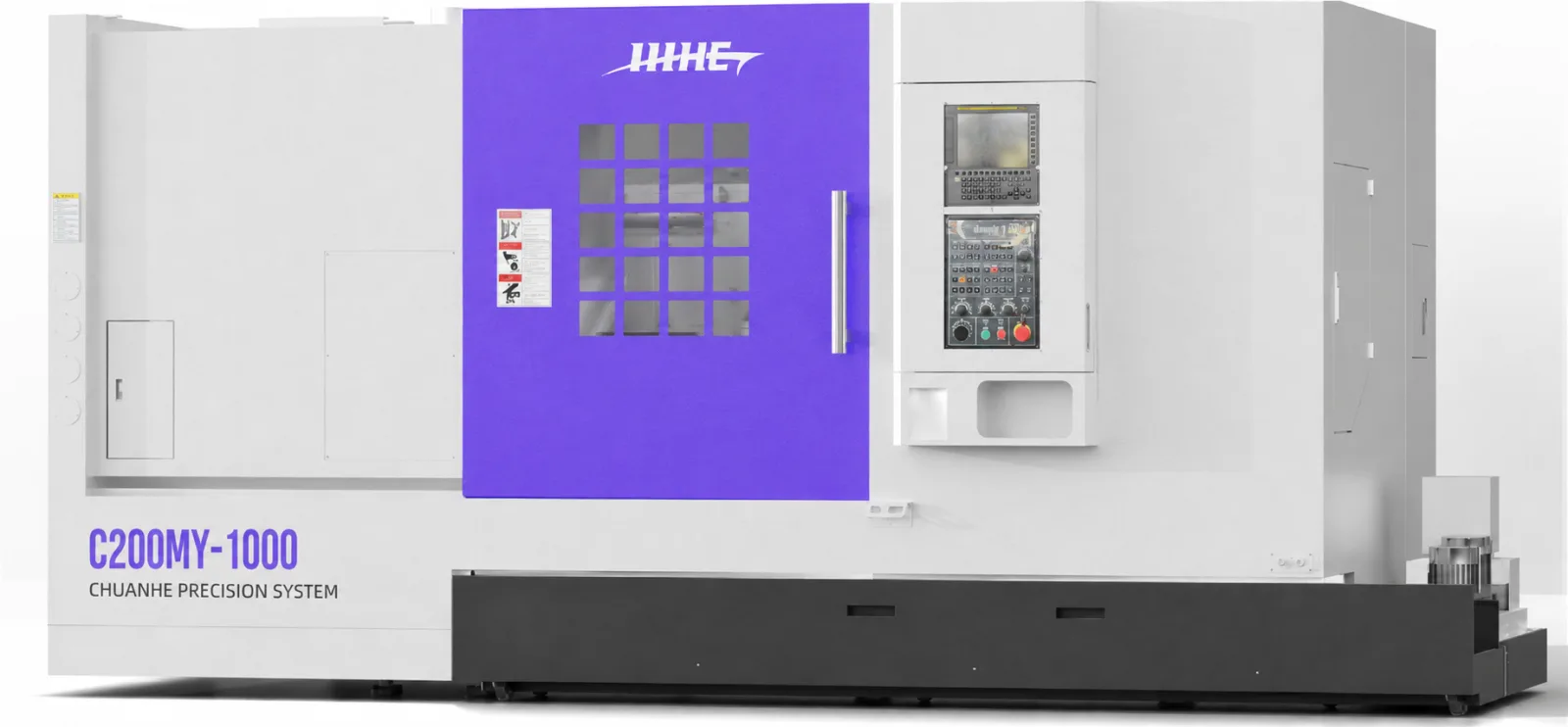 Turning + milling
Evaluate powered tooling and Y-axis options for parts combining turning, drilling, tapping or milling.
Front + back-side workEvaluate front- and back-side machining with a spindle layout matched to the complete process.
This is a starting guide, not a final machine recommendation. Match dimensions and process requirements against the specific model’s published specifications.
| Customer situation | Start by considering | Ask before recommending | When to review another option |
|---|---|---|---|
| Repeat small parts with a stable tool set | Gang Type Lathe | What bar size and how many tools? Will the complete sequence fit? | Consider a turret when tooling flexibility or interference becomes a constraint. |
| Different turned parts or larger tooling needs | Turret Type Lathe | What are the chucking, turning-length and boring requirements? | Review turn-mill if drilled or milled features require another setup. |
| Turning plus milling, holes or flats | Turning-Milling Center | Where are the features? Is Y-axis capability required by the tool path? | Do not assume every turn-mill model has Y-axis or identical tooling. |
| Front- and back-side operations | Twin-Spindle Lathe | Can the workpiece be transferred and supported? Which operations run on each side? | Confirm tooling, transfer and cycle balance from the complete process. |
Finished features, raw stock, hardness and tolerances.
Diameter, length, bar size, chucking and support.
Turning, milling, back-side features and tool access.
Batch size, cycle target, changeover and automation needs.
Use factory application support to confirm the configuration before quoting.
Use the published model information to explain the differences between turning, turn-mill and twin-spindle configurations.
Coordinate specifications, application questions and machine selection before confirming a customer proposal.
Discuss project registration, qualified regional inquiry referrals and agreed exhibition or advertising support.
Project protection, discounts, territory rights, marketing activities, warranty and service responsibilities are subject to written agreement—not automatic entitlements. Read the distributor program →
Use the model name to identify the machine family and key capabilities, then check the specification table to confirm your selection.
Chuck diameter is not the maximum turning diameter or bar capacity. The number after the hyphen is only a nominal turning-length reference. Confirm the actual dimensions, configuration and usable machining envelope in the model’s specification table, taking workholding and tooling into account.
This guide covers the standard P and C naming patterns shown here. Do not apply it to additional letters or special series such as CX200, C200H or C200HS; check their individual product pages.
Choose a family to find the existing product pages. Series may overlap where a model combines turn-mill and twin-spindle capability.
Model links retain the current published URLs. Final machine configuration is confirmed in the project quotation.
Tell us about your customer base, current product range and service capability. Together, we can review product fit and a practical cooperation plan.
Already buying for your own factory? Discuss your machining project →
Applications are welcome worldwide. Territory availability and appointment are reviewed individually.
Discuss a focused range based on your market and customer experience. Product scope and cooperation terms are agreed individually; you do not need to assume that every family suits your market.
Yes. Chuanhe can review a practical support arrangement. Installation, training, travel, warranty and service responsibilities must be agreed for each project.
Send the drawing, material, quantity, process and target cycle time. Cycle estimates and automation options require application evaluation; no universal saving or output figure is promised.
These describe different capabilities and can overlap. Turn-mill adds milling-related operations; a twin-spindle layout addresses work on two spindles. The correct combination depends on feature geometry, workholding, tooling and the operation sequence.